ChronoForge to shut down amid funding collapse and Web3 gaming turmoil

cointelegraphPubblicato 2025-12-10Pubblicato ultima volta 2025-12-10

Introduzione

ChronoForge, a Web3 game studio developing a multiplayer action RPG with onchain asset ownership, is shutting down by December 30 due to severe financial difficulties. The studio cited funding shortfalls, an 80% staff reduction, and poor market sentiment in the Web3 gaming sector. Founders had been financing development personally since July. The closure reflects broader challenges in GameFi, where funding has dwindled and user interest has declined. A 2024 report indicated 93% of Web3 game projects were defunct, with token prices down 95% from all-time highs. Despite these struggles, gaming remained one of the most active sectors in Web3 in October, accounting for nearly 28% of decentralized application activity.

ChronoForge, a Web3 game studio developing a multiplayer action RPG centered on onchain asset ownership, is shutting down after months of operating with a drastically reduced team, a closure that underscores the severe financial pressures facing the Web3 gaming sector during the current market downturn.

On Wednesday, the studio announced it will cease all services by Dec. 30, citing “many headwinds,” including a funding shortfall that forced the founders to finance development out of pocket since July and reduce staff by 80%.

In a statement posted to social media, the team said it had continued operating under intense financial strain, pushing out patches and new features “despite no marketing budget, below sustainment revenue, loss of codevelopers and terrible Web3 gaming sentiment.”
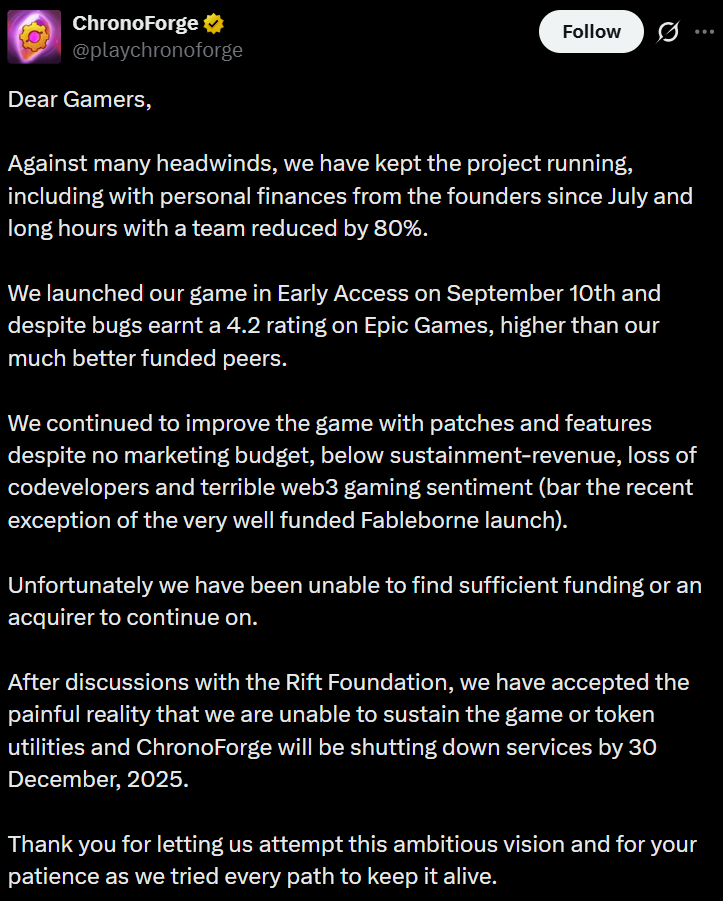
Source: ChronoForge

Abhishek Pawa, founder of the cryptocurrency consulting company AP Collective, said the closure “reflects how difficult the Web3 gaming market has been this cycle.”

ChronoForge was developed by Minted Loot Studios. Its affiliated entity, Rift Foundation, oversees the game’s token and ecosystem. The foundation raised more than $3 million through the sale of the RIFT token to support development.

The project became active in 2022, when it launched its first NFT collection and began early community-building efforts.

Related: VC Roundup: Big money, few deals as crypto venture funding dries up

GameFi’s broader struggle — and a few bright spots

Web3 gaming, often referred to as GameFi, has faced weak funding and declining user interest through much of 2025.

By late last year, 93% of Web3 game projects were considered defunct, according to a report by ChainPlay, a blockchain gaming platform. At the time, GameFi token prices had dropped 95% from their all-time high.

The trend marked a sharp reversal from the previous crypto bull market, which peaked in 2022 and fueled a surge in demand for GameFi projects.

Venture capital interest in the sector has also waned, given the dismal returns. More than half of the VCs that invested in GameFi as of late 2024 had lost money, according to ChainPlay.

Still, there have been some bright spots. Data from DappRadar shows that GameFi and decentralized finance were the most active sectors in Web3 in October, with gaming accounting for nearly 28% of all decentralized application activity during the month.
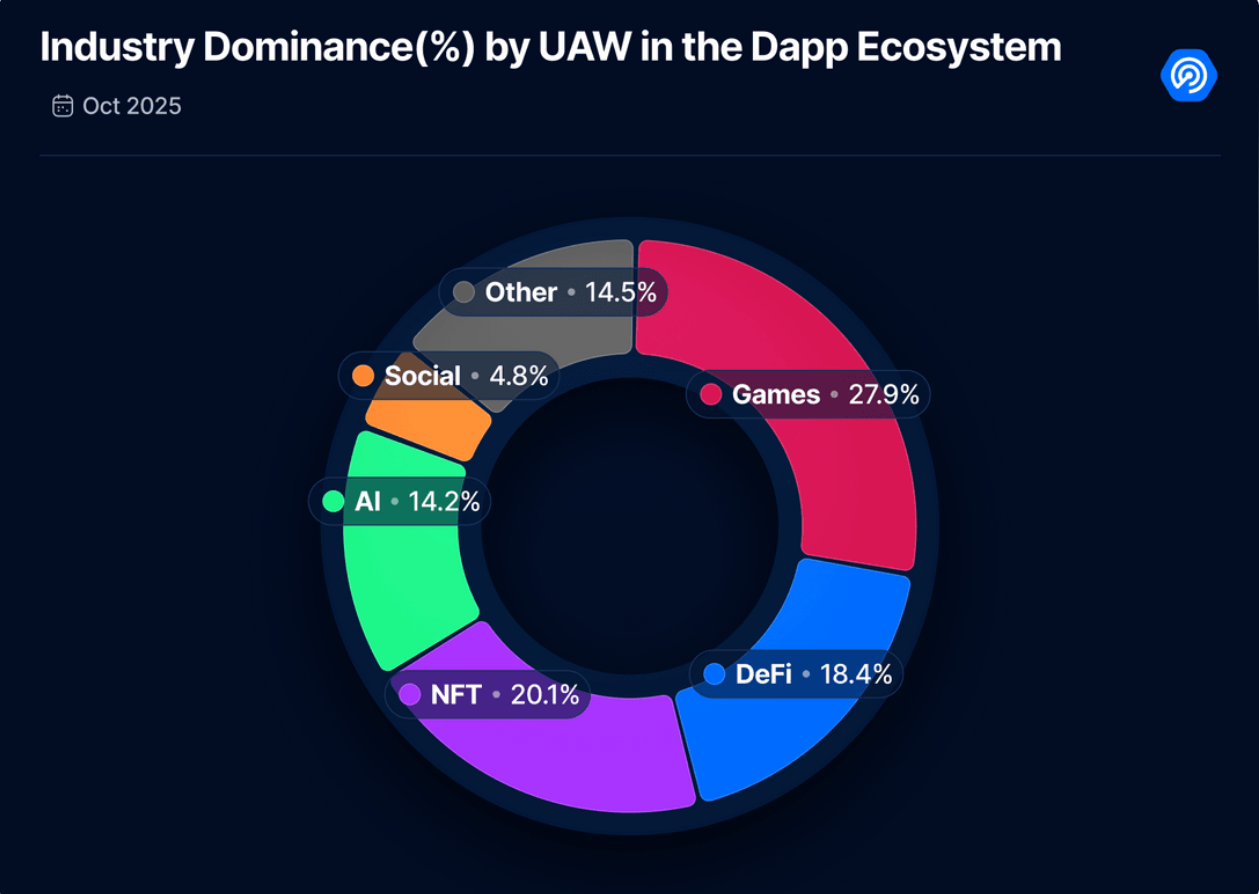
Within Web3, gaming represented the highest number of unique active wallets in October. Source: DappRadar

Related: Investors target ‘fun-first’ crypto games as funding jumps 94% in July

Letture associate

Don't Lose Heart in Crypto, Be a Pragmatic Optimist

Nic Carter, co-founder of Castle Island Ventures, responds to Ken Chan’s pessimistic essay “I Wasted 8 Years of My Life in Crypto” by arguing for a pragmatic and optimistic outlook on the crypto industry. While acknowledging that Chan’s critique—that crypto has devolved into a massive speculative casino rather than a decentralized financial system—contains truth, Carter contends that the industry still holds meaningful purpose. Carter identifies five core visions driving crypto: restoring sound money (e.g., Bitcoin as a global monetary asset), encoding business logic via smart contracts, making digital property real (e.g., NFTs and Web3), improving capital market efficiency, and expanding global financial inclusion. He admits that many early idealistic expectations—such as hyperbitcoinization or revolutionary digital ownership—have not materialized, and that much of the current activity involves speculation, memecoins, and gambling. However, Carter advocates for “pragmatic optimism.” He argues that speculative excess and financial nihilism are unfortunate but inevitable byproducts of building permissionless, open financial infrastructure. The key is to focus on the real, albeit gradual, progress: Bitcoin’s adoption, functional stablecoins, decentralized exchanges, and improved financial access in developing regions—without succumbing to either utopian fantasies or cynical despair.

marsbit13 min fa

Don't Lose Heart in Crypto, Be a Pragmatic Optimist

marsbit13 min fa

Trading

Spot
Futures
活动图片